
Objetos Poéticos – Poetic Objects
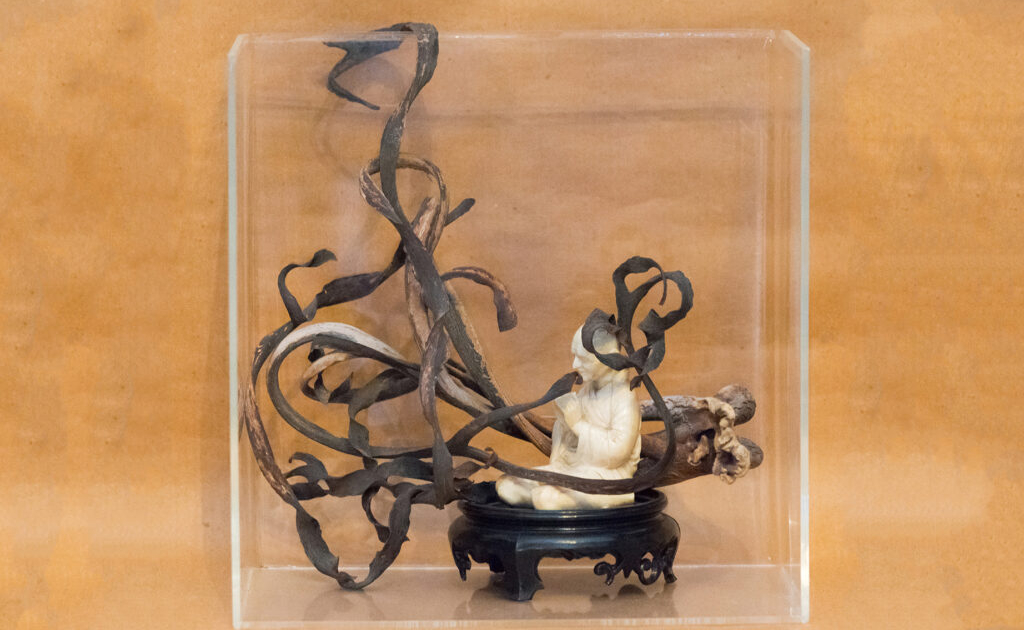
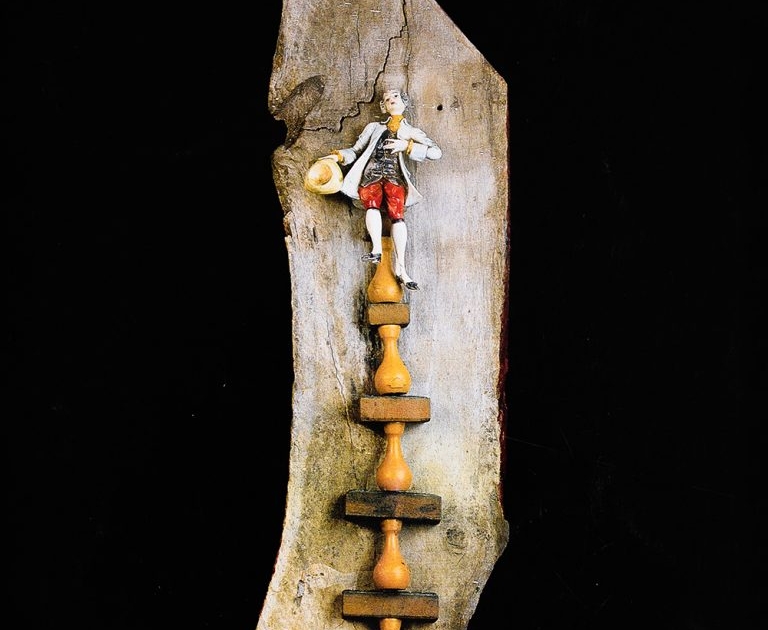
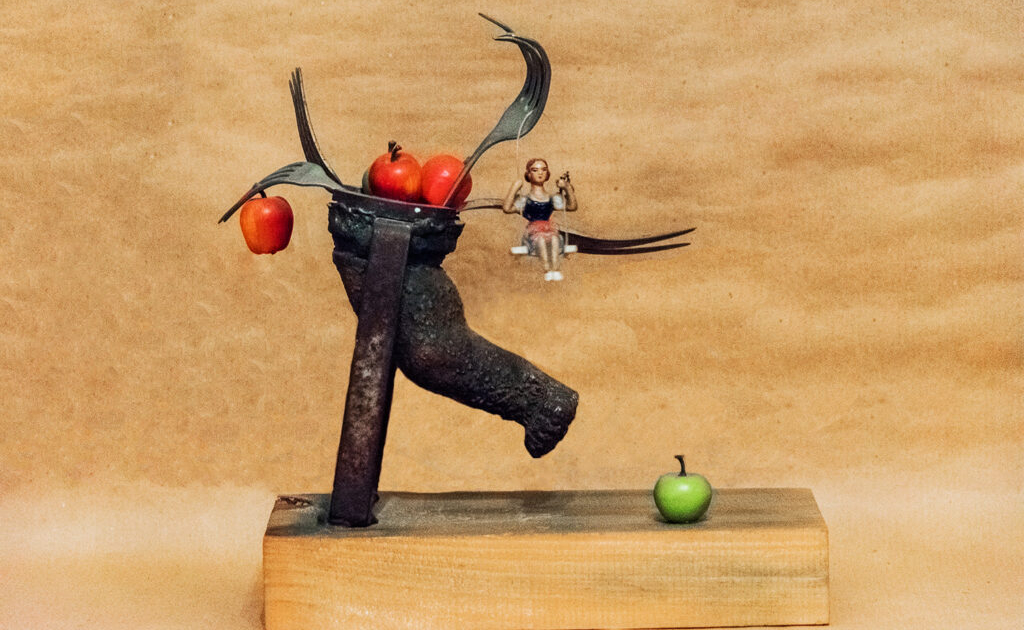
Así me dijeron que podían llamarse, y eso me regocija por ellos, por ustedes, por mí. Quizás encontremos la manera de reconocer lo poético en lo inútil, en lo marginal.
Cada objeto es la expresión de múltiples manos. Cada mano aportó su sustancia. Cada mano ayudó a lanzarme a otra dimensión, y es allí donde los invito a encontrarnos. El secreto es la mirada. Ella conduce hacia formas que, desde cualquier lugar, seducen primero y luego llaman a gritos para que no las dejemos abandonadas. Las formas nos entregan su suerte y, con desparpajo y alegría, las podemos tomar para luego desparramarlas. Hagamos calidoscopios de cualquier cosa y, con anhelo y con sorpresa, lo viejo será nuevo en permanencia.
That’s what they told me they could be called, and that delights me—for them, for you, for me. Perhaps we will find a way to recognize the poetic in the useless, in the marginal. Each object is the expression of many hands. Each hand contributed its substance. Each hand helped launch me into another dimension, and it is there that I invite you to meet me. The secret is the gaze. It leads toward forms that, from anywhere, first seduce and then cry out so we won’t leave them abandoned. Forms entrust us with their fate and, with boldness and joy, we can take them and then scatter them. Let us make kaleidoscopes out of anything, and with longing and surprise, the old will become permanently new.
Ultimos trabajos – Latest Work

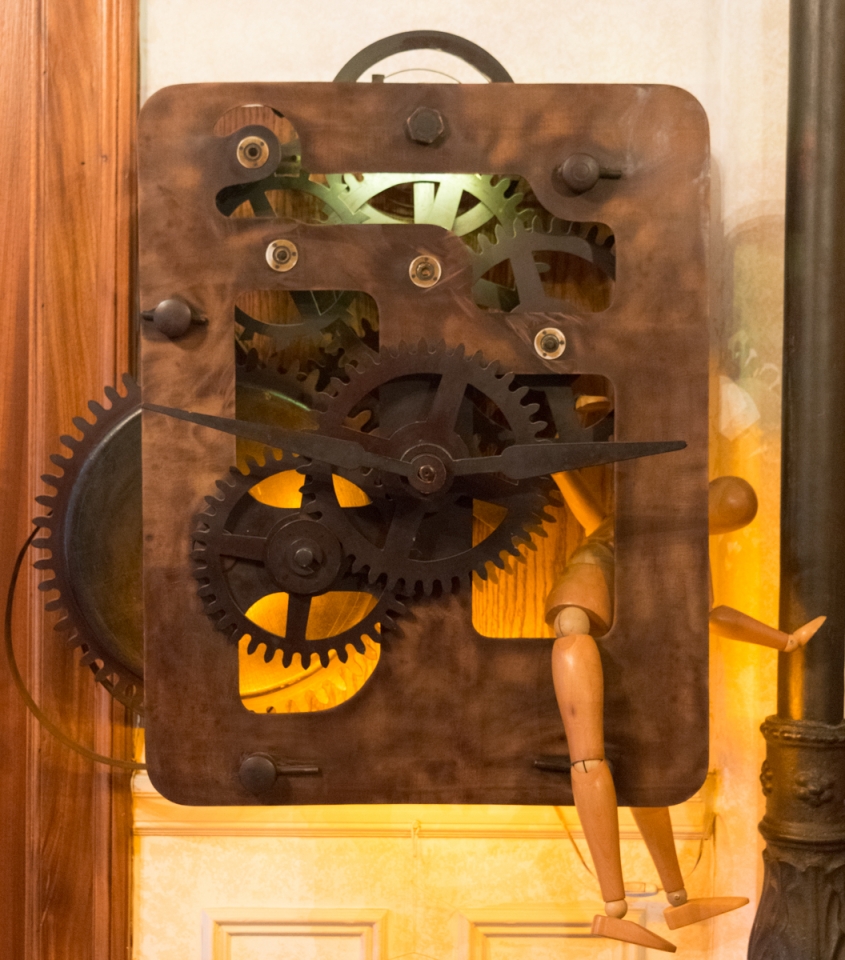
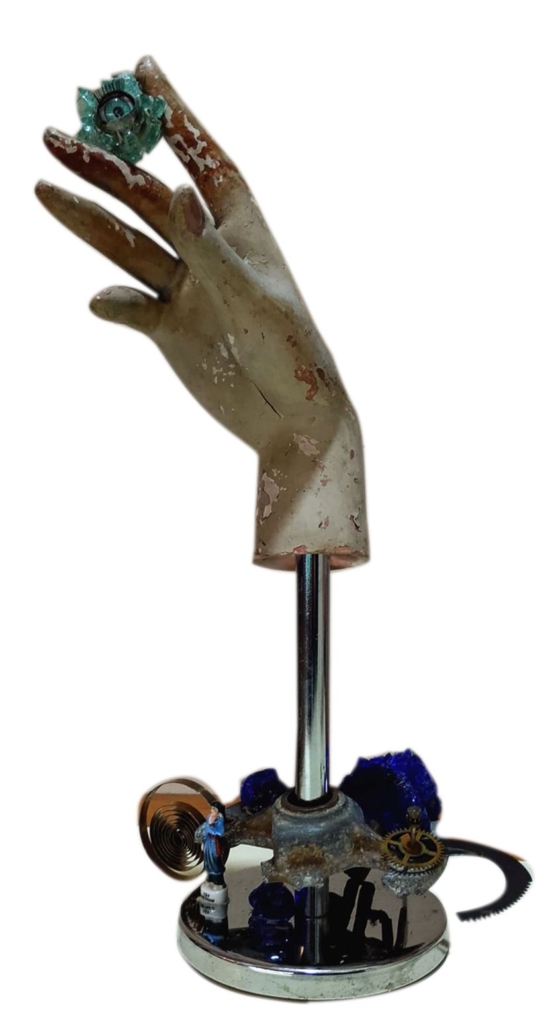
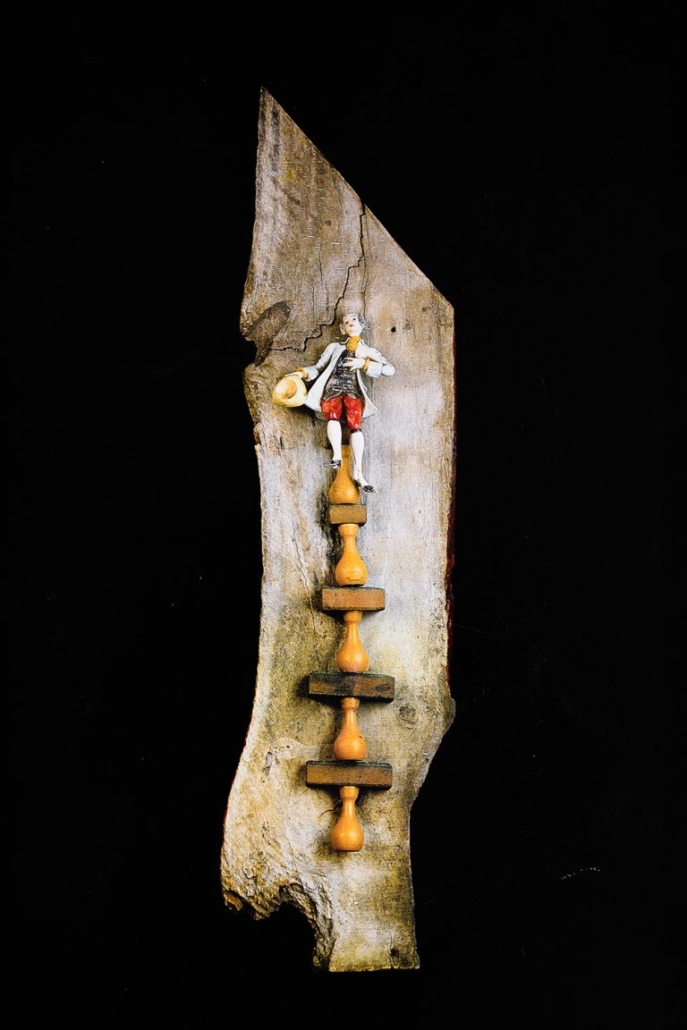
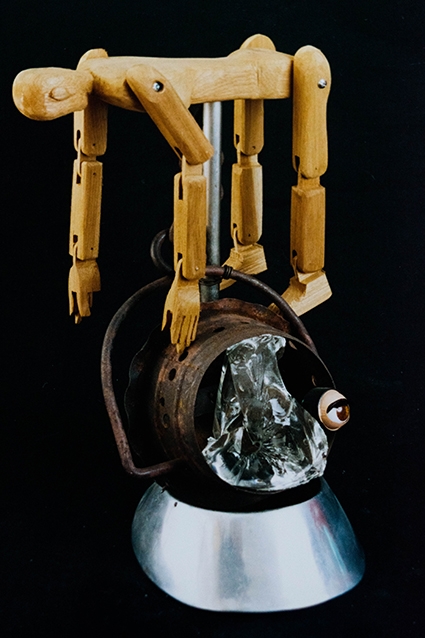
Que dicen los criticos de mi obra / What art critics say about my work
In the 1980s, in Argentina, some artists enthusiastically followed a trend linked to the latest metamorphosis of expressionism. The emergence of a painting grounded in eclecticism, primitivism, and chromatic warmth.
Toward the end of the decade, however—a period of profound cultural transformation in the country that began with the end of the military dictatorship—other currents emerged that inaugurated an aesthetic project different from that promoted by the transavant-garde. The main characteristic of the artists included in this new line, in addition to the diversity of their conceptual frameworks, is the anti-expressionist nature of their aesthetics.
Within this context and as part of this group is the work of Graciela Zuik, who is one of its most notable interpreters.
Her installations and objects always appear aligned with the formal parameters of architectural space and are characterized by being made from recycled materials.
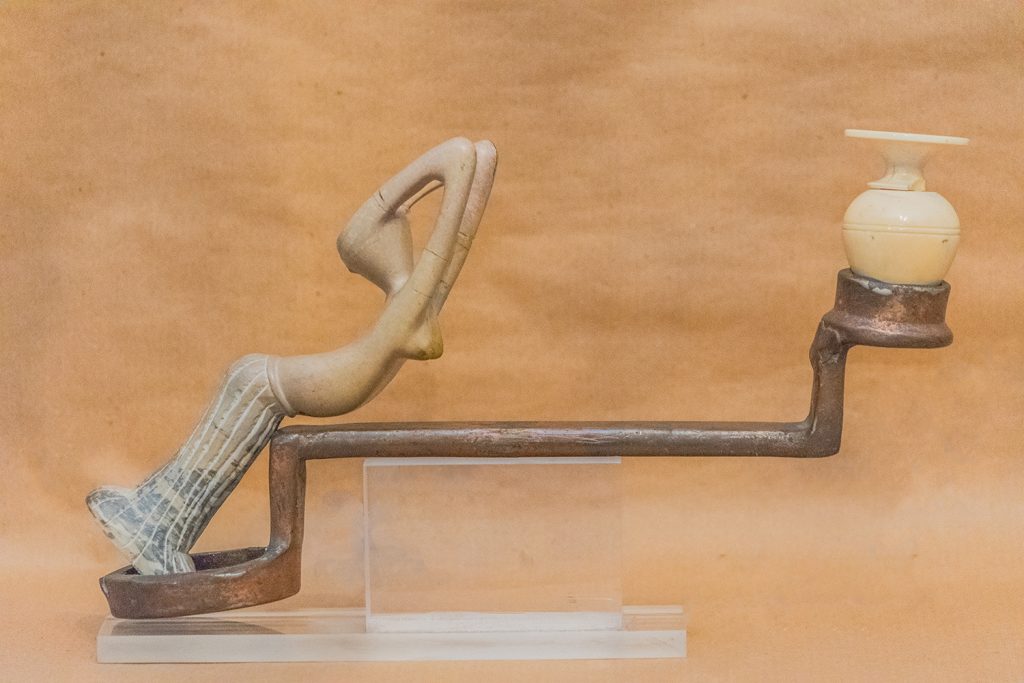
Some critics have described these assemblages by Graciela as POETIC OBJECTS.
Indeed, the dialectic of these objects is articulated around hearing and sight. In this work, the “visible” is transformed into the “sayable.” This implies a poetic purpose within visual language.
These objects, assemblages, and installations require an extremely attentive gaze and an interpretation on the part of the viewer, capable of organizing the different materials that literally become their meaning.
All of this is created using everyday elements, with remnants of common, worn objects; thus, this work appears as a synthesis of multiple languages: arte povera, surrealist collage, and certain conceptual traits.
The slender lamps that are also a motif in her work make evident the factual bidimensionality of their support. This utilitarian aspect in objects—clearly artistic—highlights the relationship between the work and architecture and gives it a functional character.
The coexistence of art, the utilitarian, the ephemeral, and the devalued alludes to problematic mechanisms of recognizing reality and points toward the disappearance of any artistic syntax. These works are animated by a certain unease in the face of the more negative processes of consumer society and the anonymous seriality of its objects.
They are images that poeticize the banal, inviting us to “see” with the fascinated gaze of children who invent media monsters and oneiric scenes with dolls and pieces of wood.
Indeed, Graciela’s characters move through imaginary and surreal worlds where everything is meticulously organized.
The place of each object acquires particular importance and is filled with enigmas to be discovered. The hallucinatory worlds that this artist bequeaths to the viewer open the doors to their own imagination, inviting them to enter the game and adopt new points of view.
En los años ochentas, en la Argentina, algunos artistas siguieron con entusiasmo una tendencia ligada a la última metamorfosis del expresionismo. La visita de una pintura fundada en el eclecticismo, en el primitivismo y en la calidez cromática.
Pero hacia fines de la década, época de profunda transformación cultural en el país que se inicia con el fin de la dictadura militar, surgieron otras vertientes que inauguraron un proyecto estético diferente del que impulsaron los transvanguardistas. El rasgo principal de los artistas incluidos en esta nueva línea, además de la diversidad de sus marcos conceptuales, es el carácter antiexpresionista de su estética.
En esta línea y dentro de este grupo se inscribe el trabajo de Graciela Zuik, que es uno de sus intérpretes notorios.
Sus instalaciones y sus objetos aparecen siempre aliados a los parámetros formales del espacio arquitectónico, y se caracterizan por ser el producto de material reciclado.
Algunos críticos han calificado a estos ensamblajes de Graciela, OBJETOS POÉTICOS.
En efecto la dialéctica de estos objetos se articula en torno al oído y a la mirada. En esta obra lo “visible” se transforma en “decible”. Esto implica una finalidad poética en el lenguaje visual.
Estos objetos, ensamblajes e instalaciones, requieren una mirada en extremo atenta y una interpretación, por parte del espectador, capaz de organizar los distintos materiales que devienen, en sentido literal, su significación.
Todo esta realizado con elementos cotidianos, con restos de objetos comunes, desgastados, es así que esta obra aparece como una síntesis de lenguajes múltiples: el arte povero, el collage surrealista y ciertos rasgos conceptuales.
Las esbeltas lámparas que también son motivo de su trabajo, hacen evidente la bidimensionalidad fáctica de su soporte. Este rasgo utilitario en objetos, evidentemente artísticos subraya la relación de la obra con la arquitectura y le aporta un carácter funcional.
La convivencia entre el arte, lo utilitario, lo efímero, y lo desvalorizado aluden a los mecanismos problemáticos de reconocimiento de la realidad y apuntan a la desaparición de cualquier sintaxis artística. Son trabajos animados por cierto malestar frente a los procesos más negativos de la sociedad de consumo y frente a la serialidad anónima de sus objetos.
Son imágenes que poetizan lo banal, invitando a “ver” con la mirada fascinada de los niños que inventan con muñecas y trozos de maderas monstruos mediáticos y escenas oníricas.
En efecto en los personajes de Graciela se mueven en mundos imaginarios y surreales donde todo está minuciosamente organizado.
El lugar de cada objeto adquiere una importancia particular y están llenos de enigmas a descubrir. Los mundos alucinatorios que esta artista lega al espectador, abren las puertas de su propio imaginario, lo incitan a entrar en el juego y a adoptar nuevos puntos de vista.
Esta artista ha conseguido liberar de su significación propia a objetos encontrados haciéndolos entrar en transformaciones hacia el concepto que da origen a la obra.
¿Cómo lo logra? Utiliza analogías plásticas unificando las unidades que integran la pieza en un vivero de color que oculta el origen de la materia empleada llevándonos a la asociación poética del conjunto.
El comportamiento del color es el que nos permite viajar de una textura a otra resignificando esos giros y olvidando su origen cotidiano: el dato de la realidad externa.
Al descontextualizar el objeto –sacarlo de su lugar– la artista consigue dotarlo de correspondencia sensible. En ese rescate simbólico nunca está ausente la figura humana y es porque Graciela Zuik sitúa su arte en una esfera intermedia entre la realidad y el sujeto.
Ingeniosas en lo visual, patéticas en contenido, a veces sarcásticas, proponen un juego de doble imagen. La artista trabaja con materiales de desecho, recicla fragmentos, en algún sitio dormidos, que funcionan encaramados en un nuevo texto conectándolo con nuestras fantasías. Allí estamos invitados. Y siempre “el marco” precede nuestro encuentro con la obra, a veces de sabor barroco, y otras americanista en forma de cajas, como las que en tiempos pretéritos del Perú contenían el arte, arte que se expresaba como objeto de culto, de ritual. ¿Quizás otro enigma de la obra?, tal vez.
El impulso de reciclar, de producir de nuevo, de transplantar para seguir generando existencias poéticas en otras partes, es la constante. ¿Acaso no es eso la vida?
De amplio sentido simbólico, dotadas de dinámica y desparpajo, chispeantes de ironía, muchas veces dramáticos y descarnados, los objetos de Graciela Zuik guardan algo mágico, cual talismanes que hacen dichosos a sus poseedores.
This artist has succeeded in freeing found objects from their original meaning, leading them through transformations toward the concept that gives rise to the work.
How does she achieve this? She uses formal analogies, unifying the units that make up the piece within a field of color that conceals the origin of the material used, guiding us toward a poetic association of the whole.
The behavior of color allows us to travel from one texture to another, re-signifying these shifts and forgetting their everyday origin: the data of external reality.
By decontextualizing the object—removing it from its place—the artist succeeds in endowing it with a sensitive correspondence. In this symbolic rescue, the human figure is never absent, because Graciela Zuik situates her art in an intermediate sphere between reality and the subject.
Visually ingenious, pathetically charged in content, sometimes sarcastic, the works propose a play of double imagery. The artist works with discarded materials, recycling fragments once dormant somewhere, which function elevated within a new text, connecting it to our fantasies. We are invited there. And “the frame” always precedes our encounter with the work—sometimes baroque in flavor, at other times Americanist in the form of boxes, like those that in bygone times in Peru contained art, art expressed as an object of worship and ritual. Perhaps another enigma of the work? Maybe so.
The impulse to recycle, to produce anew, to transplant in order to continue generating poetic existences elsewhere, is constant. Is that not life itself?
Of broad symbolic meaning, endowed with dynamism and boldness, sparkling with irony, often dramatic and raw, the objects of Graciela Zuik preserve something magical—like talismans that bring happiness to their owners.
At first glance, GRACIELA ZUIK has traveled the world—but not only the world we all inhabit, that is, planet Earth; she has also journeyed through her inner world.
Characters made from wood and Chilean shells, Costa Rican Pacific snails, masks from Peru and Guatemala, seeds and ceramics from Brazil, palm trees from the Argentine delta, Bolivian figurines—these are assembled and reorganized to give birth to a new expression, a surrealist expression in which the artist’s dreams intertwine with the arcana of Latin America.
Graciela Zuik travels across this continent and gathers its testimonies. She observes with admiration its Indigenous inhabitants, the silent landscape of their faces, the brilliant colors of their garments with which they attempt to ward off the pain of their subjugation and poverty, and finally that space of nature so varied, so rich, so shaped by the hands of the people who live there.
Graciela blends elements, just as she feels within herself the emotions produced by this interweaving of eras, in which the living testimony of yesterday coexists with that of today.
At times one feels transported centuries back, as in the Spanish conquest, and she represents this in the mirrored box entitled “America.” In it, two figurines from Easter Island appear hanged.
The artist associates this with America—America since the conquest…
Graciela Zuik surprises and moves us with her objects and invites us to immerse ourselves in her creativity.
She shows us that Latin America is one, that its borders are artificial, and that, just as the artist offers through her objects, different elements from different places on this continent can come together to create an object that synthesizes the spirit of its people.
A ojos vista, GRACIELA ZUIK ha viajado por el mundo, pero no solo por el mundo que todos habitamos —es decir, este planeta Tierra—, sino que también ha recorrido su mundo interior.
Personajes surgidos de maderas y conchillas chilenas, caracoles del Pacífico de Costa Rica, máscaras del Perú y Guatemala, semillas y cerámicas del Brasil, palmeras del delta argentino, figuritas bolivianas: todos ellos son ensamblados y reorganizados para dar nacimiento a una nueva expresión, una expresión surrealista en la que los sueños de la artista se entrelazan con los arcanos de Latinoamérica.
Graciela Zuik recorre este continente y recoge sus testimonios. Observa con admiración a sus habitantes indígenas, el paisaje silencioso de sus rostros, el brillante colorido de sus ropajes con los que intentan ahuyentar el dolor de su sometimiento y su pobreza, y finalmente ese espacio de naturaleza tan variada, tan rica, tan trabajada por la mano de los hombres que allí habitan.
Graciela mezcla elementos, así como siente mezclados en ella los sentimientos que le produce este entrevero de épocas, en el que conviven el testimonio vivo del ayer y el de hoy.
A veces se cree en siglos atrás, como en la conquista española, y eso lo representa en la caja espejada que se llama “América”. En ella, dos figuritas de la Isla de Pascua aparecen ahorcadas.
La artista asocia esto con América, la América desde la conquista…
Graciela Zuik nos sorprende y conmueve con sus objetos y nos invita a sumergirnos en su creatividad.
Nos muestra cómo Latinoamérica es una sola, que sus fronteras son artificiales y que, tal como la artista lo ofrece en sus objetos, distintos elementos de distintos lugares de este continente pueden conformar un objeto que sintetice el espíritu de su gente.